

If you have ever tried to figure out what size battery you need for whole home battery backup, you already know the frustration. Ask 10 people online how many kWh is enough, and you get 10 different answers, some say 10kWh covers a whole house, others say even 30kWh cannot handle central air conditioning. Neither answer is really wrong, because the number only matters relative to what your home actually needs to keep running when the grid goes down.
Quick answer: For most households, yes, a 32kWh battery is enough. It covers a full day of normal electricity use, including central air conditioning, without rationing power circuit by circuit. The Humsienk 48V 628Ah battery delivers 32.15kWh of usable capacity and a 10.24kW continuous output, built for households that want whole home battery backup rather than a handful of emergency circuits.
How Do You Know What Size Battery You Actually Need?
Battery capacity works like a fuel tank. The tank size only matters relative to how much fuel the engine burns, and a home is no different. A standard refrigerator draws around 1.5kWh per day. A router running around the clock adds close to 0.5kWh. A handful of LED lights left on for an evening barely reaches 1kWh combined. These small loads add up to less than most people expect. The real draw comes from a shorter list of heavy appliances: central air conditioning, electric ovens, heat pumps, and water pumps.
Most households fall into one of 3 rough categories: a smaller household running only core electronics and a refrigerator needs 8kWh to 12kWh, a household wanting to keep living close to normal, air conditioner and kitchen appliances included, needs 25kWh to 35kWh, and a larger home with multiple air conditioner units or an EV to charge often needs 40kWh or more. Knowing which category applies is the real first step, before comparing any specific product.
Is 32kWh Actually Enough for Your Home?
For a household that wants whole home battery backup rather than a stripped down emergency setup, the household trying to keep life close to normal during an outage, 32kWh sits almost exactly where the math lines up. It is not the bare minimum that forces a choice between running the refrigerator or the air conditioner, and it is not far enough beyond typical daily use to pay for capacity that never gets used.

Humsienk New Product: 32kWh LiFePO4 battery
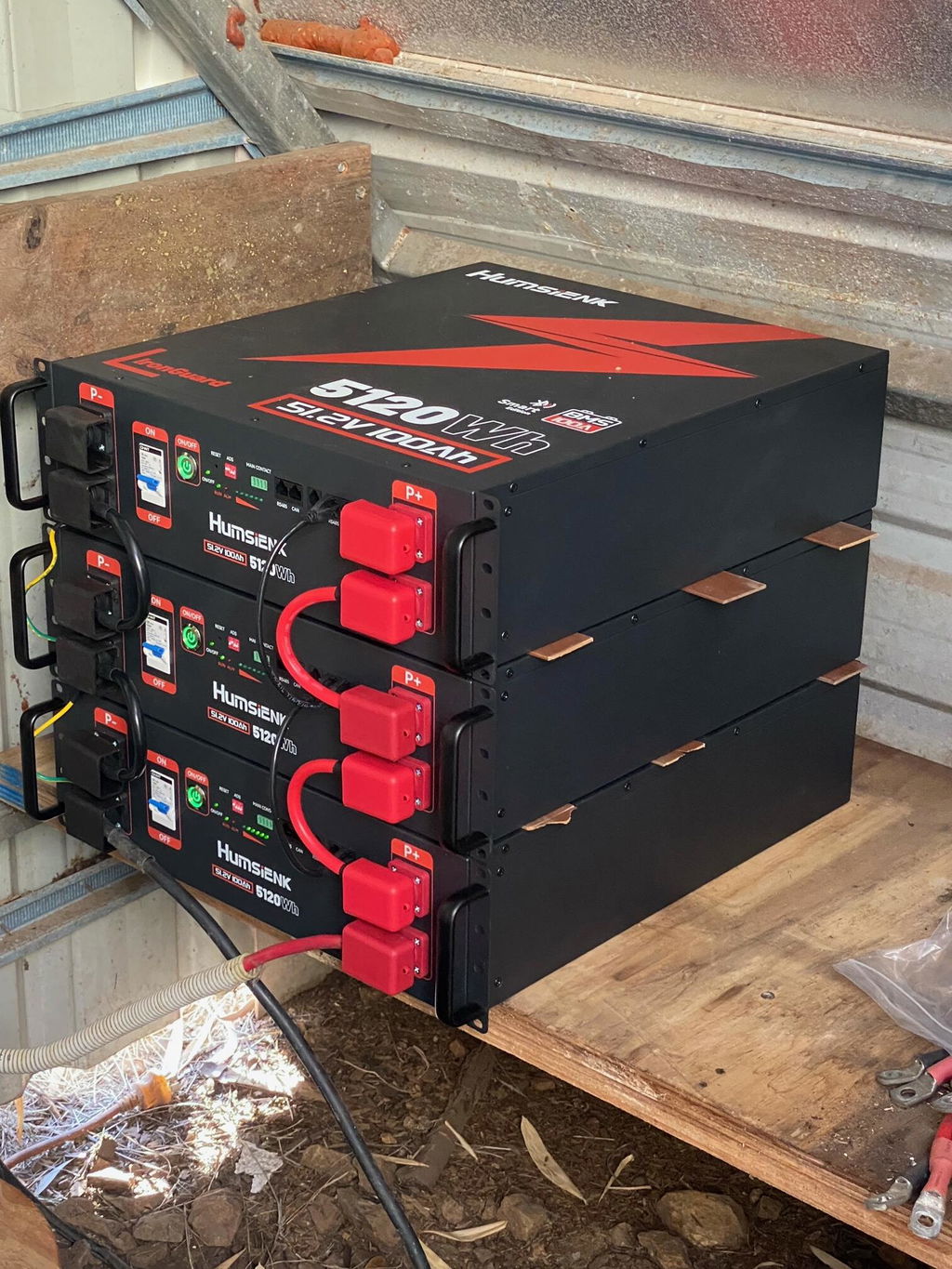
Most home batteries on the market sit in the 5kWh to 15kWh range per unit, and reaching 30kWh or more usually means installing 2~3 units in parallel. That approach works, but it adds real costs beyond the equipment itself, more wall space, more wiring, more labor hours, and more communication links that can fall out of sync. None of that shows up on a spec sheet, but it shows up on the installation invoice.
This gap between what households need and what the market typically offers in a single unit is part of why Humsienk built the 48V 628Ah battery. Instead of stacking multiple smaller batteries to reach 32kWh, it delivers that capacity in one unit.
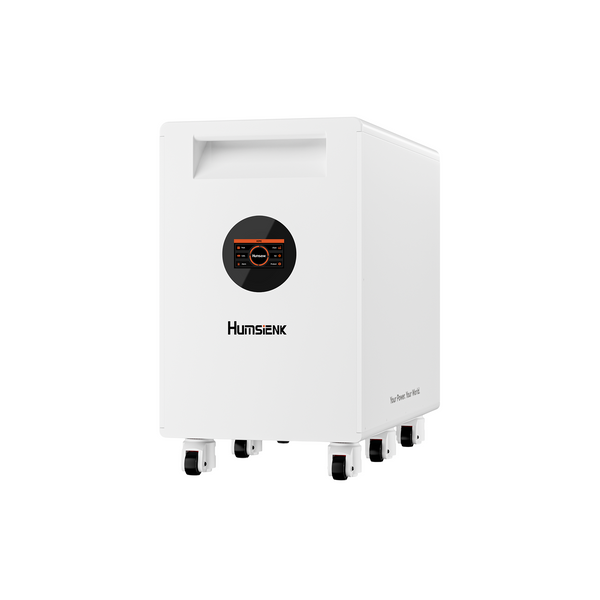
48V 32kWh LiFePO4 Battery
How Much Is 32kWh Whole Home Battery?
Humsienk is officially launching the 48V 628Ah 32.15kWh LiFePO4 battery at $4,999.99. As part of the launch, a $500 new arrival discount brings the price down to $4,499.99, available through August 31th. This is an exclusive, time-limited discount tied specifically to the new product launch, not a standing price, so it will not carry over once the window closes.
For households planning the full setup rather than the battery alone, Humsienk is also offering a bundle with a 12kW hybrid inverter at $5,799.98. This bundle package is built for anyone looking for a complete whole home backup power solution or home battery energy storage system, not just the battery by itself. Enter discount code READER6% at checkout for an additional 6% off, after the coupon code only $5,451.99.
Buying the 32kWh battery alone still qualifies for the $500 new arrival discount, but the 6% reader code is reserved for the battery and inverter bundle. This 120/240V 12kW dual MPPT hybrid solar inverter price is 1399.99, 12kW pure sine wave output, powers all home appliances with ease.
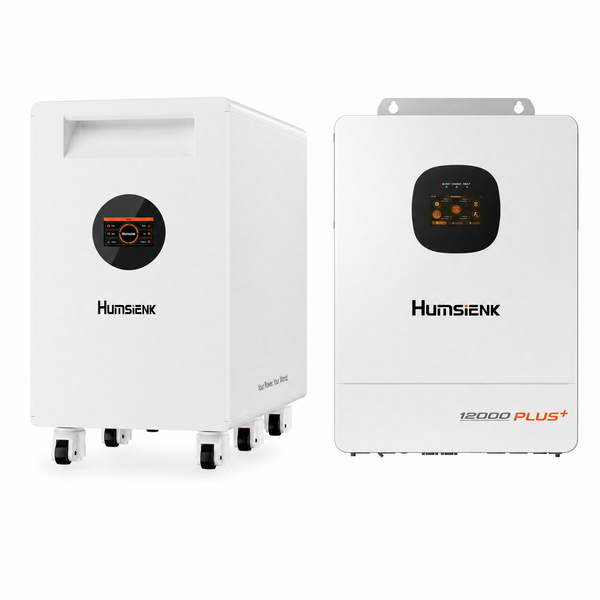
32kwh LiFePO4 Battery + 12kw inverter ($5,451.99)
Can This Battery Actually Power Your Air Conditioner?
Capacity is only half the considerations. The other half is current, how much power a battery can push out at once, especially during the startup surge of an air conditioner compressor. A battery that reaches 32kWh but caps out at a low discharge current will often trip its own protection the moment a compressor kicks on, regardless of how much energy is sitting in reserve.
The Humsienk 48V 628Ah battery supports a maximum continuous discharge current of 200A, which works out to roughly 10.24kW of continuous output through a compatible inverter. That covers central air conditioning, heat pumps, and instant water heaters alongside smaller kitchen loads, without the system cutting out under sudden demand. Not every 32kwh LiFePO4 battery on the market delivers that much current, which is often the difference between a battery that looks sufficient on paper and one that performs during an actual outage.
How Long Will the Battery Last Before It Needs Replacing?
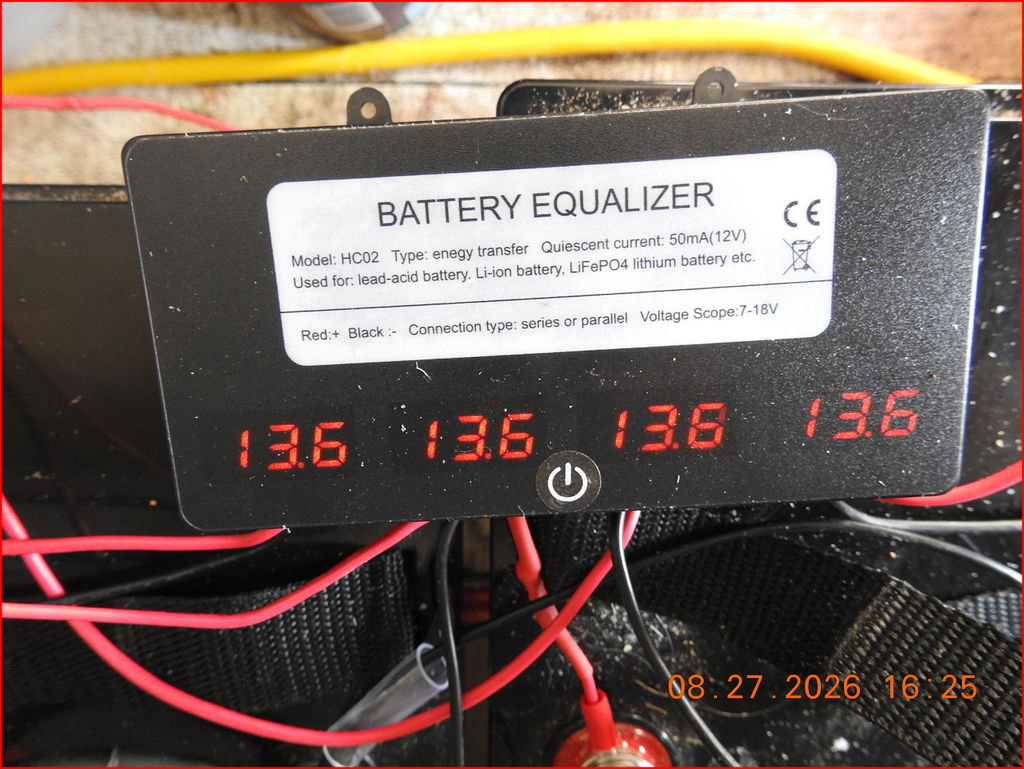
Behind the enclosure sits a 16S1P configuration of EV Grade A+ LiFePO4 cells, paired with a 3A active balancing system. Cell grade matters, but balancing determines whether a large pack ages evenly. In any multi-cell pack, one weaker cell can drag down the whole unit over time, sometimes called the weak link effect. Passive balancing, common in lower-cost batteries, corrects for this at only tens of milliamps. Active balancing at 3A works dozens of times faster, keeping cells much closer in performance over years of use.
That is a meaningful part of why this battery is rated for more than 6,000 cycles at 80% DOD (depth of discharge), roughly 16 years of service at one full cycle per day, longer than many home energy storage battery options built around passive balancing alone.
Does Adding More Capacity Later Get Complicated?
For households that may need more than 32kWh eventually, from a growing home, an EV, or added electric heating, the 628Ah battery supports manual and automatic addressing for up to 6 units in parallel, reaching a combined 192.92kWh. That figure goes well past what most residential energy storage setups ever call for. It sits closer to the range typically associated with commercial and industrial energy storage, without asking anyone to switch to a different product line or a different battery management system to get there.
It also carries an IP54 rating for garage or semi-outdoor installation and communicates over CAN, RS485, RS232, or Bluetooth, covering more than 25 mainstream inverter brands, which matters whether the installation is a single-unit home BESS or a larger multi-unit setup down the line. The practical benefit is starting with one unit instead of three, then expanding an existing system later rather than rebuilding it. A homeowner installing one 628Ah battery today for whole home battery backup can add a second or third unit years later without re-engineering the wiring or communication setup already in place. And for anyone eyeing this battery for something closer to a small business, a farm building, or a light industrial site, the same expansion path carries a residential-grade BESS all the way into genuine commercial and industrial energy storage territory, built around the same 48V 628Ah unit throughout.